|
|
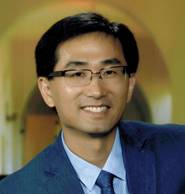
Yinghong
Sheng, Ph.D. Professor
of Chemistry Department
of Chemistry & Physics Office: Seidler Hall
302 Phone: 239-590-7636 Email: ysheng@fgcu.edu |
An exciting and challenging
aspect of computational chemistry is to develop inter-disciplinary projects
that integrate state-of-the-art computational chemistry methods with
biological, environmental, and material sciences.
My research experience
includes study of (1) the structure-property relationships of nonlinear optical
(NLO) materials and aromatic systems; (2) the reaction mechanisms of organic
chemical reactions, homogeneous catalytic polymerization, cycloisomerization,
dihydroxylation of olefins; (3) the molecular structures and the nature of
interactions in weakly interacting systems; (4) photochromism; (5)
Stimuli-Responsive Materials; (6) Chemical Sensors.
Computational Chemistry is a
versatile and economical tool for different applications. It provides valuable
data regarding the structure and interaction of molecules in different systems.
The facility requirement for conducting computational studies is less demanding
than setting up an experimental lab.
You can do your experiments
on a PC cluster, or even on a single PC. It provides undergraduate or graduate
students a platform to learn the fundamental computational methods and skills.
EDUCATION
Postdoctoral Fellow, Jackson
State University
Postdoctoral Fellow, Emory University
Visiting Scholar, The Hong Kong University of Science & Technology, Hong
Kong, China.
Ph.D., Nanjing University, Jiangsu, China
M.S., Beijing Normal University, Beijing, China
B.S., Jiangxi Normal University, Jiangxi, China
RESEARCH INTERESTS: Reaction Mechanism, Organic Chemistry, Organometallic
Chemistry, Molecular Structures and Properties, Material Chemistry,
Photochemistry, Biochemistry, Environmental Chemistry, Nonlinear Optical
Material, Ionic liquids, Nitric Oxide Synthase.
Organic Chemistry and Organometallic Chemistry
·
Mechanisms of
organic reactions
·
Design of new
catalysts for stereoselective organic synthesis
·
Early-transition-metal
alkyl and alkylidene complexes; Design of new catalysts for olefin
metathesis and acetylene polymerization
·
Dihydroxylation of
olefins by osmium tetraoxide
·
Catalytic, endo-selective alkynol cycloisomerization,
an important reaction type of the invention of new chemical transformations
Molecular Structures and Properties
·
Molecular
structures, properties, nature of chemical bonds in weakly interacting systems
·
Molecular
potential energy surfaces and vibrational spectra
·
Material
Chemistry and Photochemistry
·
Nonlinear optical
(NLO) property of conjugated organic molecules
·
Photochromic
materials
·
Spectroscopic and
theoretical determination on the structures of polymer films
Biochemistry
·
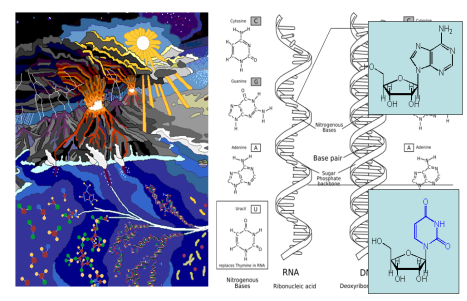
The formation
of glycosidic bonds between ribose and free pyrimidines –
Prebiotic synthesis of pyrimidine nucleosides
·
Mechanisms of
reactions in biosystems
·
Structural basis
for regulation of electron transfer in Nitric-oxide Synthase (NOS)
·
QSAR study on
light-induced cytotoxicity of 16 polycyclic aromatic hydrocarbons on the US EPA
priority pollutant list in human skin HaCaT keratinocytes
Environmental Chemistry
·
Computational
predictions and validation of properties, interactions and mechanisms of
sorption of hydrophobic compounds
·
Hydrogen sulfide
and other contaminants sensing mechanisms
TEACHING
·
Computational
Modeling (CHM4512)
·
Principles
of Physical Chemistry (CHM3400)
·
Principles
of Physical Chemistry Laboratory (CHM3400L)
·
General
Chemistry II Lecture (CHM1046, Scale-up)
·
General
Chemistry II w/Laboratory (CHM1046C)
·
General
Chemistry II Lecture (CHM1046)
·
General
Chemistry II Laboratory (CHM1046L)
·
General
Chemistry I Lecture (CHM1045, Scale-up)
·
General
Chemistry I Lecture w/Laboratory (CHM1045C,
Scale up)
·
Physical
Chemistry for Life Sciences w/Laboratory (CHM3005C)
·
Physical
Chemistry II Lecture (CHM3411)
·
Physical
Chemistry Laboratory (CHM3410L)
·
Systems
of Physical Science w/laboratory (ISC1002C)
·
Senior Project
Research in Biotechnology (BSC4910C)
·
Direct
Independent Study/Research in Biotechnology (BSC4905)
·
Direct
Independent Study/Research in Chemistry (CHM4905)
·
General
Chemistry II Laboratory (CHML 142,
Honors)
·
General
Chemistry I Lecture (CHEM 141)
AWARDS AND GRANTS
·
Acquisition of
High-Performance Computation Servers for Computational Research and Education
at FGCU. 2019. PI. FGCU
Scholarship-Research Venture Fund.
·
FGCU
Computational Center: Modeling and Simulations, 2019.
·
Grant (in 10000
hours of computing time) from Center for Advanced Research Computing (CARC) at
the University of New Mexico. 2014-2018.
·
Center for
Chemical Evolution, $20,320,615, 2010-2015. Jointly funded by National
Science Foundation (NSF Grant No. CHE-1004570) and National Aeronautics and
Space Administration.
·
FGCU
Multi-Disciplinary Research Initiative Award, 2013-2014.
·
Junior Faculty Teaching Excellence Award, Florida Gulf Coast University, 2008-2009.

PUBLICATIONS, TALKS &
PRESENTATIONS
I.
Selected
Articles published
(1)
Arsalan
Mirjafari, David Siegel, Rachel Burton, Joseph Muller, Matthew Regner, Yinghong Sheng, Gregory McManus, James
MacDonald “From gene delivery agents
to ionic liquids: The impacts of cation structure and anion identity on
liquefaction”, Journal of
Molecular Liquids, 2019, 276,
334-337.
(2)
Yinghong Sheng,
Matthew Regner “Role of Water Molecules and
Counterion on HS- Sensing Reaction Utilizing a Pyrylium Derivative:
A Computational Study”, J.
Phys. Chem. A, 2019, 123, 3334-3343.
(Featured in Cover of the journal)

(3)
Zack Schultz, Jamie C.
Gaitor, Rachel D. Burton, Matthew Regner, Yinghong Sheng, Arsalan Mirjafari “Phosphorodithioate-functionalized
ionic liquids: synthesis, physicochemical properties and palladium complexation
studies” J. Mol. Liq. 2019, 276, 334-337.
(4)
Jinghui Li, Huaya
Zheng, Wei Wang, Yubin Miao, Yinghong
sheng and Changjian Feng “Role of an isoform-specific
residue at the calmodulin-heme (NO synthase) interface in the FMN – heme
electron transfer” FEBS
Letters 2018, 592, 2425-2431.
(5)
Jamie C. Gaitor,
Lauren M. Paul, Melissa M. Reardon, Taha Hmissa, Samuel Minkowicz, Matthew
Regner, Yinghong Sheng, Scott F.
Michael, Sharon Isern and Arsalan Mirjafari “Ionic liquids with thioether motifs
as synthetic cationic lipids for gene delivery” Chem. Commun., 2017, 53, 8328. (Cover Article Candidate)
(6)
S. Thigpen, S. T.
Nestor, R. A. O’Brien, S. Minkowicz, Y. Sheng, J. H. Davis, Jr., K. N. West, A. Mirjafari, “Thioether-functionalized picolinium
ionic liquids: synthesis, physical properties and computational studies”. New Journal of Chemistry, 2017, 41, 1625-1630.
(7)
O'Brien, Richard
A.; Zayas, Manuel Sanchez; Nestor, Stephen T.; Gaitor, Jamie C.; Paul, Lauren
M.; Edhegard, Forrest A.; Minkowicz, Samuel; Sykora, Richard E.; Sheng, Yinghong; Michael, Scott F.;
Isern, Sharon; Mirjafari, Arsalan, “Correction: Biomimetic design of
protic lipidic ionic liquids with enhanced fluidity” New Journal of Chemistry 2016, 40, 8970.
(8)
O'Brien, Richard
A.; Zayas, Manuel Sanchez; Nestor, Stephen T.; Gaitor, Jamie C.; Paul, Lauran
M.; Edhegard, Forrest A.; Minkowicz, Samuel; Sykora, Richard E.; Sheng, Yinghong; Michael, Scott F.;
Isern, Sharon; Mirjafari, Arsalan, “Biomimetic design of protic lipidic
ionic liquids with enhanced fluidity” New Journal of Chemistry 2016,
40, 7795 – 7803.
(9)
O'Brien, Richard
A.; Zayas, Manuel Sanchez; Nestor, Stephen T.; Gaitor, Jamie C.; Paul, Lauran
M.; Edhegard, Forrest A.; Minkowicz, Samuel; Sykora, Richard E.; Sheng, Yinghong; Michael, Scott F.;
Isern, Sharon; Mirjafari, Arsalan, “CCDC 1450654: Experimental
Crystal Structure Determination”, Cambridge Crystallographic Data
Centre, 2016.
(10) Manuel Sanchez Zayas, Jamie C. Gaitor, Stephen T.
Nestor, Samuel Minkowicz, Yinghong
Sheng and Arsalan Mirjafari, “Bifunctional
hydrophobic ionic liquids: Facile synthesis by thiol-ene “click” chemistry”
Green Chemistry, 2016, 18, 2443 – 2452.
(11) Yinghong Sheng, Linghao Zhong, Dahai Guo, Gavin Lau,
Changjian Feng, “Insight into structural
rearrangements and interdomain interactions related to electron transfer
between flavin mononucleotide and heme in nitric oxide synthase: A molecular
dynamics study” Journal of
Inorganic Biochemistry 2015, 153,
186–196.
(12) Richard A. Braun, Joseph L. Bradfield, Codey B.
Henderson, Niloufar Mobarrez, Yinghong
Sheng, Richard A. O’Brien, Alexandra C. Stenson, James H. Davis Jr. and
Arsalan Mirjafari, “Click chemistry mediated synthesis
of bio-inspired phosphonyl-functionalized ionic liquids” Green Chem., 2015, 17, 1259-1268.
(13) Yinghong Sheng,
Jerzy Leszczynski, “Thermal racemization of
spiropyrans: implication of substituent and solvent effects revealed by
computational study”, Struct. Chem. 2014, 25, 667-677.
(14) Yinghong
Sheng*, Yi Ren, “Computational Study on a HS–
Sensing Reaction Utilizing a Pyrylium Derivative”, J. Phys. Chem.
A, 2012, 116, 5420–5427.
(15)
Zhe Quan,
Christine Purser, Rodney C. Baker, Terry Dwyer, Rajesh
Bhagat, Yinghong Sheng, Jerzy
R. Leszczynski, “Determination of Derivatized
Urea in Exhaled Breath Condensate by LC-MS”, Journal of Chromatographic Science, 2010,
48, 140.
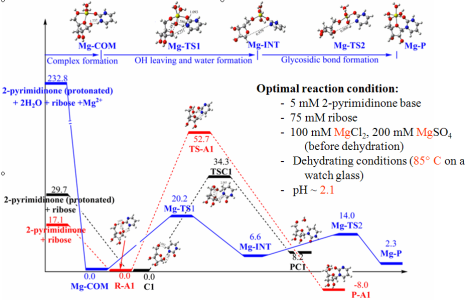
(16)
Yinghong
Sheng*, Heather D. Bean, Irena Mamajanov, Nicholas V. Hud and Jerzy Leszczynski, “Comprehensive Investigation of the
Energetics of Pyrimidine Nucleoside Formation in a Model Prebiotic Reaction”, J. Am. Chem. Soc. 2009,
131, 16088.
(17)
Chao Deng, Xiao-Peng Wu, Xiao-Ming Sun,
Yi Ren, Ying-Hong Sheng* “Neutral
hydrolyses of carbon disulfide: An ab initio study of water catalysis”,
J. Comput. Chem. 2009, 30, 285.
(18)
Min Yu, Marek. W. Urban, Yinghong Sheng, Jerzy, Leszczynski “Molecular Recognition at Methyl
Methacrylate/n-Butyl Acrylate (MMA/nBA) Monomer Unit Boundaries of
Phospholipids at p-MMA/nBA Copolymer Surfaces”, Langmuir, 2008, 24,
10382.
(19) Heather D. Bean, Yinghong Sheng, James P. Collins, Jerzy
Leszczynski, and Nicholas V. Hud “Formation of a
β-Pyrimidine Nucleoside by a Free Pyrimidine Base and Ribose in a
Plausible Prebiotic Reaction”,
J. Am. Chem. Soc. Communications. 2007, 129, 9556.
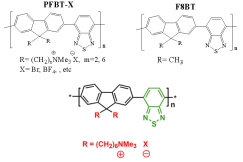
(20) Yinghong
Sheng, Jerzy Leszczynski, Thuc-Quyen
Nguyen, Anu Bamgbelu “Theoretical Study on the
Structure and Property Relationship of the Cationic Conjugated Polyelectrolytes”,
Structural Chemistry, 2007, 18, 827.

(21) Shuguang Wang,
Yinghong Sheng, Manliang Feng, Lei
Wang,
(22) Yinghong
Sheng, Jerzy Leszczynski “Theoretical
Study of the Regioselectivity of the Cycloaddition Reaction between
Cyclopentadiene and Methyleneketene”, Tetrahedron, 2006, 62(29), 7014.
(23) Yinghong
Sheng, Szczepan Roszak, and Jerzy Leszczynski,
“The Molecular Structures
and Nature of Interactions in N2H+-Hen
(n = 1 - 12) Complexes”,
Mol. Phys. 2005, 103, 1091.
(24) Zhe Quan; Yaru Song;
Andrea Saulsberry; Yinghong Sheng;
Yi-Ming Liu. “Capillary Electrophoresis for
Diastereomers of (R,S)-Tetrahydroisoquinoline-3-Carboxylic Acid Derivatized
with (R)-4-Nitro-7-(3-Aminopyrrolidin-1-yl)-2,1,3-Benzoxadiazole: Effect of
Molecular Geometries.”
Journal of Chromatographic Science, 2005, 43(3), 121-125.
(25) Zhe Quan, Yaru Song, Gladys Peters, Ming Shengwu, Yinghong Sheng, Huey-Min Hwang, and
Yi-Ming Liu, “Chiral CE Separation of Dopamine
Derived Neurotoxins”, Analytical
Sciences, 2005, 21(2), 115-9.
(26) Yinghong
Sheng, Szczepan Roszak, and Jerzy
Leszczynski, “Microsolvation of N2H+:
The nature of interactions in N2H+-(H2)n
(n = 1 - 14) complexes”, J. Chem. Phys., 2004, 120, 4324.
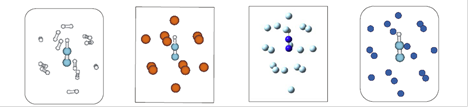
(27) Yinghong
Sheng, Yun-Dong Wu,
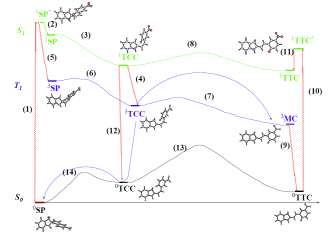
(28) Yinghong
Sheng, Jerzy A. Leszczynski, Antonio
A. Garcia, Rohit Rosario, Devens Gust, Joseph Springer, “Comprehensive
Theoretical Study of the Conversion Reactions of Spiropyrans: Substituent and
Solvent Effects”, J. Phys. Chem. B, 2004,
108, 16233.
|
|
|
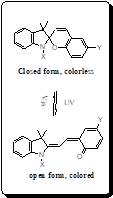
(29) Yinghong
Sheng and Jerzy Leszczynski, “Theoretical Study of the
Substituent and Solvent Effects on the Molecular Structures, Absorption and
Emission Spectra of Spiropyrans” Collection of Czechoslovak Chemical
Communications, 2004, 69, 47-62.
(30) Yinghong
Sheng, Ramaiyer Venkatraman, Józef S. Kwiatkowski, Joanna
Majewska and Jerzy Leszczynski, “A DFT and MP2
Study on the Molecular Structure, Vibrational Raman and Infrared Spectra of
Halogenosubstituted Phosphoryl and Thiophosphoryl Compounds”, Structural Chemistry, 2003, 20, 511.
(31) Yinghong
Sheng and Jerzy Leszczynski, “A
Comprehensive Computational Study on OCH+-Rg (Rg = He, Ne, Ar, Kr,
Xe ) Complexes”, Collection of
Czechoslovak Chemical Communications, 2003,
68, 489.
(32) Yinghong Sheng, Djamaladdin G. Musaev, Frank, E.
McDonald and Keiji Morokuma, “Computational Studies of
Tungsten-Catalyzed endo-Selective Cycloisomerization of 4-Pentyn-1-ol”, J. Am. Chem. Soc., 2002, 124, 4149.
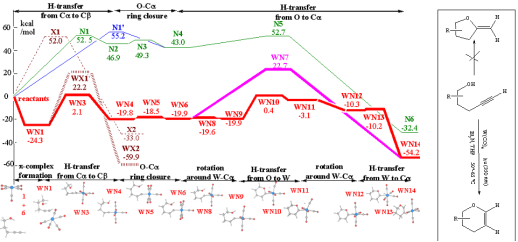
(33) Yinghong
Sheng, Robert W. Gora, Malgorzata
Kaczorowska, Szczepan Roszak, and Jerzy Leszczynski, “The
molecular structures, energetics, and nature of interactions in Arn-N2H+
(n=1-12) complexe”, J.
Phys. Chem., 2002, 106, 11162.
(34) Yinghong
Sheng and Jerzy Leszczynski, “A
Comprehensive Computational Study of N2H+-X (X = He, Ne, Ar, Kr, Xe, and H2)
Complexes”, J. Phys. Chem.,
2002, 106, 12095.
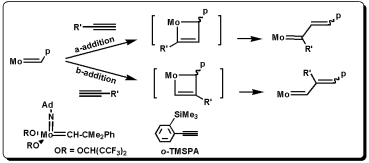
(35) Ying-Hong Sheng, Yun-Dong Wu, "Theoretical Studies on Acetylene
Addition to Molybdenum Alkylidenes: The preference of a-and badditions", J. Am. Chem. Soc., 2001,
123, 6662.
(36) Ying-Hong Sheng,
De-Cai Fang, Yun-Dong Wu, Xiao-Yuan Fu, Yuansheng Jiang, "DFT Study on the
Mechanism of the Cycloaddition Reaction between Methyleneketene and 1-pyrroline-1-oxide",
Journal Molecular Structure: THEOCHEM, 1999, 467,
31.
(37) Ying-Hong Sheng,
De-Cai Fang, Yun-Dong Wu, Xiao-Yuan Fu, Yuansheng Jiang, "DFT Study on the
Mechanism of the Cycloaddition Reaction between Methyleneketene and
5-Methylene-1,3-Dioxan-4,6-Dione: Solvent Effect and Regioselectivity",
Journal Molecular Structure: THEOCHEM, 1999, 488,
187-194.
(38) Yinghong Sheng, Yuansheng Jiang, "Theoretical Study on Molecular
First-Order Hyperpolarizability for
Push-Pull Polyenes and Quinones: The Effects of Donor-Acceptor Pairs and
Solvents", Bulletin of the Chemical society of Japan,
1999, 72, 2155.
(39) Yinghong Sheng, Yuansheng Jiang, Xiao-Chuan Wang, "An AM1 study of the relationship
between the donor-acceptor strength and the polarizabilities of push-pull
polyenes", J. Chem. Soc. Faraday Trans.,1998, 94, 47.
(40) Yinghong Sheng, Yuansheng Jiang, "AM1/CI Study on the First-Order
Hyperpolarizability of Push-Pull Polyenes and Push-Pull Quinones. A Two-Level Model Evaluation",
J. Chem. Soc. Faraday Trans., 1998, 94,
1823.
(41) Yinghong Sheng, Yuansheng Jiang, "Polarizability and
Hyperpolarizability of Push-Pull Quinonoid Moleculaes: Simulation of
Donor-Acceptor Pairs", J. Chem. Soc. Faraday Trans., 1998, 94, 1829.
(42) Yinghong Sheng, Decai Fang, Xiaoyuan Fu, "Theoretical
Study on the Mechanism of the Cycloaddition Reactions between Methyleneketene
and 5-methylene-1,3-dioxan-4,6-dione", Acta Physico-Chimica Sinica,1996, 12,
496.
(43) Yinghong Sheng, Decai Fang, Xiaoyuan Fu, "A
Theoretical Study on the Mechanism of the Cycloaddition Reaction between
Methyleneketene and 1-Oxo-Butadiene",
Journal of Beijing Normal University (Natural Science), 1995, 31, 99.
(44) Yinghong Sheng, Decai Fang, Xiaoyuan Fu, The Seventh National Symposium on Physical
Organic Chemistry of China. Pp201-202, Xi'an, Oct. 10-20, 1995.
(45) Book Chapter in Xin Xing Xue Ke Bai Wan Ge Wei Shen Me, Center National
University, 1994.
II. Conference Talks
& Presentations
(1)
Mirjafari, Arsalan; O'Brien, Richard A.; Sykora,
Richard; Sanchez Zayas, Manuel; Sheng,
Yinghong, “Drug-based lipidic ionic liquids: A new class of biomaterials”
251st ACS National Meeting & Exposition, San Diego, CA, United States,
March 13-17, 2016, Pages
ORGN-638.
(2)
Sanchez Zayas, Manuel; Gaitor, Jamie; Nestor,
Stephen; Minkowicz, Shmuel; Sheng,
Yinghong; Mirjafari, Arsalan “Click synthesis of bifunctional ionic liquids via
thiol-ene chemistry for surface coating applications”, 251st ACS
National Meeting & Exposition, San Diego, CA, United States, March 13-17, 2016, Pages ORGN-181.
(3)
Shmuel Minkowicz, Yinghong Sheng, “Biomimetic Design of Lipidic
Ionic Liquids with Enhanced "Fluidity" FGCU STEM Undergraduate
Research & Internship Symposium, Dec. 4, 2015.
(4)
Yinghong Sheng, Linghao
Zhong, Jordan Wirth, “Computational simulations on structural changes
and domain interactions between flavin mononucleotide and heme in murine
inducible nitric oxide synthase” Drug Discovery & Therapy World Congress
(DDTWC) at Boston, MA, June 22-25, 2015.
(5)
Jonathan Voss, John
Reilly, Yinghong Sheng,
“Geometric and Electrostatic Changes in Histidine Ammonia-Lyase Active Site as
Function of pH and Temperature” FGCU Research Day, April 17, 2015.
(6)
Jordan Wirth, Yinghong Sheng, “Predicting the Docked
structure of the Reductase and FMN/CaM Domains of Mammalian Inducible Nitric Oxide
Synthase” FGCU Research Day, April 17, 2015.
(7)
Yinghong Sheng, Linghao
Zhong “Molecular Dynamic simulations on the redox-dependent conformational
changes in interdomain electron transfer in Human inducible nitric oxide” Drug
Discovery & Therapy World Congress (DDTWC) at Boston, MA, June 16-19, 2014.
(8)
Matthew Smith and Jordan Wirth, Yinghong Sheng, “Computational Modeling on the
Docking Structure between Flavin Mononucleotide-Calmodulin Complex and
Oxygenase Domain in Human Inducible Nitric Oxide Synthase”, FGCU Research Day,
April 18, 2014.
(9)
Yinghong Sheng,* Linghao
Zhong, Gavin Lau “Computational Simulations of the Intrinsic Regulation
of Electron Transfer in Human Inducible Nitric Oxide Synthase” BIT’s 4th Annual
Global Congress of Catalysis (GCC-2013) at the Dalian World Expo Center, Dalian, China during June 29 – July 1, 2013.
(10)
Yinghong Sheng,
“Computational Simulations of the Intrinsic Regulation of Electron Transfer in
Human Inducible Nitric Oxide Synthase” Insitituet of Polymers, Jiangxi
Provincial Key Laboratory of New Energy Chemistry, Nanchang University, China,
June 24, 2013.
(11)
Gavin Lau, Yinghong Sheng “Computational Modeling on the
Docking Structure between Flavin Mononucleotide-Calmodulin Complex and
Oxygenase Domain in Human Inducible Nitric Oxide Synthase”, FGCU Research Day,
April 2013.
(12)
Gavin Lau, Yinghong Sheng “Computational Modeling on the
Docking Structure between Flavin Mononucleotide-Calmodulin Complex and
Oxygenase Domain in Rat Neuronal Nitric Oxide Synthase”, FGCU Research Day,
April 2013.
(13)
Gavin Lau, Yinghong
Sheng “Docking Structure between Human Inducible Nitric Oxide Synthase
Oxygenase Domain (1NSI) and Reductase Domain (3HR4)”, Computational Modeling Sprout, Florida Gulf Coast University,
December 2012.
(14)
Yinghong Sheng, Linghao
Zhong, Andrew Hedman “Development of New Force Field Parameters and Molecular
Dynamic Modeling on Ribulose Nucleic Acids” Center for Chemical Evolution
Center-wide Adobe Connect Meeting, May 3rd, 2011.
(15)
Irena Mamajanov, Heather D. Bean, Jerzy Leszczynski,
Yinghong Sheng,
Nicholas V. Hud “Experimental and Computational Investigations of Pyrimidine
Nucleoside Formation in a Model Prebiotic Reaction” Astrobiology Science
Conference 2010, 5676. 26-29 Apr 2010. League
City, Texas.
(16)
Yinghong sheng “NAI
Workshop without Walls: Molecular Paleontology and Resurrection: Rewinding the
Tape of Life”. Web Conference, Nov. 8th, 2010.
(17)
Yinghong Sheng
“Introduction to Computational Chemistry and its Applications”, the 2010
Interdisciplinary Nanotoxicity Center Summer Institute, Jackson State
University, July 21, 2010.
(18)
Yinghong Sheng “The
Application of Computational Chemistry in Some Prebiotic Reactions” Third
Annual Meeting of Center for Chemical Evolution, Atlanta, GA, June 23-25, 2010.
(19)
Yinghong Sheng
“Comprehensive Investigation of the Energetics of Pyrimidine Nucleoside
Formation in a Model Prebiotic Reaction”, the 238th American
Chemical Society National Meeting, Washington DC, August 14-21, 2009.
(20)
Yinghong Sheng
“Comprehensive Investigation of the Energetics of Pyrimidine Nucleoside
Formation in a Model Prebiotic Reaction”, the 9th Southern School on
Computational Chemistry and Material Science, Jackson, MS, July 28-29, 2009.
(21)
Marielys Figueroasierra, Yinghong Sheng, Jose Barreto “A Computational
study on a HS- Sensing
Reaction which Utilizes a Pyrylium Derivative”, The 85th Annual American
Chemical Society, Florida Section, Kissimmee, FL, United States, May 14-16, 2009.
(22)
Marielys Figueroasierra, Yinghong sheng, “Theoretical Study on a New
Chromo-chemodosimeter Selective for Sulfide Anion”, Research Day, Florida Gulf
Coast University, April 24, 2009.
(23)
Yinghong Sheng, Heather
D. Bean, James P. Collins, Nicholas V. Hud, Jerzy Leszczynski, “A Comprehensive
Investigation of Reactions between Ribose and the Free Pyrimidine Bases:
Verification of Possibility of the Formation of Pyrimidine Nucleosides under Plausible Prebiotic Reaction
Conditions”, pp26, pp29, International
Symposium on Stimuli-Responsive Materials, Hattiesburg, Mississippi, October 28-29, 2008.
(24)
Min Yu, Marek W. Urban, Yinghong Sheng, Jerzy Leszczynski, “Molecular
Recognition at the Methyl Methacrylate/n-Butyl Acrylate (MMA/nBA) Monomer Unit
Boundaries of Phospholipids at p-MMA/nBA Copolymer Surfaces” pp29, International Symposium on
Stimuli-Responsive Materials, Hattiesburg, Mississippi, October 28-29, 2008.
(25)
Min Yu, Marek W. Urban, Yinghong Sheng, Jerzy Leszczynski,
“Phospholipids Molecular Recognition at the Monomer Boundaries of Copolymer
Surfaces: Spectroscopic and Ab Initio Studies” 17th International Conference on Current Trends in
Computational Chemistry, pp176, Jackson, Mississippi, October 31-November
1, 2008.
(26)
Yinghong Sheng
“Theoretical Study on the Photochemistry of Spiropyrans”, University of
Southern Mississippi, Hattiesburg, MS, February 5-6, 2007.
(27)
Yinghong Sheng
“Theoretical Study on the Photochemistry of Spiropyrans”, Texas Southern
University, Houston, TX, May 17, 2006.
(28)
Yinghong Sheng
“Theoretical Study of the Photochemistry of Spiropyrans”, Texas A&M
University-Kingsville, Kingsville, TX, April 9-10, 2006.
(29)
Yinghong Sheng, Jerzy
Leszczynski, “Theoretical Study of the Photochemistry of Spiropyrans” 6th Southern School on Computational Chemistry, pp99, Jackson, Mississippi, April 7-8, 2006.
(30)
Yinghong Sheng
“Theoretical Study of the Photochemistry of Spiropyrans”, Roosevelt University,
Chicago, IL, February 20-23, 2006.
(31)
Yinghong Sheng
“Introduction to Computational Chemistry”, Roosevelt University, Chicago, IL,
February 20-23, 2006.
(32)
Yinghong Sheng, Jerzy
Leszczynski, “Theoretical Study of the Photochemistry of Spiropyrans” 6th Southern School on Computational Chemistry, pp99, Jackson, Mississippi, April 7-8, 2006.
(33)
Floyd A. Fayton Jr.†, Yinghong Sheng, Jerzy Leszczynski,
“Computational study on the mechanism of the cycloadition reaction between
methyleneketene and cyclopetadiene” The Computational Center for Molecular
Structure and Interactions (CCMSI) Summer Institute, Jackson, MS, June 5 – July
30, 2005. († Floyd A. Fayton Jr. won the Third Place Prize of the Student Presentation.)
(34)
Jason Ford-Green‡, Ayourinde Hassan, Yinghong Sheng, “DFT Study on the Reaction
Mechanism of the 1,3-Dipolar Cycloaddition between Ethane and Nitrile Oxide”, 13th International Conference on
Current Trends in Computational Chemistry, pp53, Jackson, Mississippi,
November 12-13, 2004. (‡ Jason Ford-Green won the First Place
Prize of the Best Student Poster.)
(35)
Jason Ford-Green, Ayourinde Hassan, Yinghong Sheng, “DFT Study on 1,3-Dipolar
Cycloaddition between Ethane and Nitrile Oxide”, 2004
Annual Biomedical Research Conference for Minority Students (ABRCMS), G35, Dallas, Texas, November 10 -
13, 2004.
(36)
Jason Ford-Green, Ayourinde Hassan, Yinghong Sheng, “DFT Study on 1,3-Dipolar
Cycloaddition between Ethane and Nitrile Oxide”, Computational Center for Molecular Structure and Interactions 2004
Summer Institute, pp6, Biloxi, Mississippi, July 29, 2004.
(37)
Yinghong Sheng, Ray
Butcher, Haijun Jiao, Bakhtiyor Rasulev, Jiande Gu, Jerome Karle, and Jerzy
Leszczynski, “Novel Aromatic 7,8-Diazapentalenes” 4th Southern School
on Computational Chemistry, pp105, Orange Beach,
Alabama, March 26-27, 2004.
(38)
Yinghong Sheng,
Szczepan Roszak, and Jerzy Leszczynski, “The Molecular Structures and Nature of
Interactions in N2H+-Xn
(X = He, Ne, n=1-17) Complexes”
3rd Southern School on Computational Chemistry, pp68, Orange Beach, Alabama, March 28-29, 2003.
(39)
Demarcio Reed, Yinghong
Sheng, and Jerzy Leszczynski, “Theoretical Study on Thermal Conversion of
Benzopyran: Subsituent and Solvent Effects” 12th
International Conference on Current Trends in Computational Chemistry, pp149,
Jackson, Mississippi, October 31- November 1, 2003.
(40)
Yinghong Sheng, Ray
Butcher, Bakhtiyor Rasulev, Jerome Karle, and Jerzy Leszczynski, 12th International Conference on
Current Trends in Computational Chemistry, pp160, Jackson, Mississippi,
October 31- November 1, 2003.
(41)
Latasha Salter, Yinghong
Sheng and Jerzy Leszczynski, “A CASSCF Study on the Mechanism of C-O Cleacage
in Pyran” Computational Center for
Molecular Structure and Interactions 2002 Summer Institute, Orange Beach,
Alabama, July 31, 2002.
(42)
Yinghong Sheng and Jerzy
Leszczynski, “Molecular Structures and Properties of N2H+-X
(X=He, Ne, Ar, Kr, Xe and H2) Complexes”, Second Southern School on Computational Chemistry, pp63, Orange Beach, Alabama, March
22-23, 2002.
(43)
Yinghong Sheng,
Szczepan Roszak, and Jerzy Leszczynski, “The Molecular Structures and Nature of
Interactions in N2H+-Nen (n = 1
- 12) Complexes”, 11th
International Conference on Current Trends in Computational Chemistry,pp138,
Jackson, Mississippi, November 1-2, 2002.
(44)
Yinghong Sheng, Ramaiyer
Venkatraman, Józef S. Kwiatkowski, Joanna Majewska and Jerzy Leszczynski,
“Theoretical Study on the Molecular Structures and Vibrational Spectra of
Halogenosubstituted Phosphoryl and Their Thio-analogs”, 11th International Conference on Current Trends in
Computational Chemistry,pp139, Jackson, Mississippi, November 1-2, 2002.
(45)
Yinghong Sheng and
Jerzy Leszczynski, “A Comprehensive Theoretical Study on the Reaction
Mechanisms of the Inversion Reaction Between Spiropyrans and Merocyanines and
the Racemization of Spiropyrans”, 11th
International Conference on Current Trends in Computational Chemistry, pp140,
Jackson, Mississippi, November 1-2, 2002.
(46)
Yinghong Sheng;
Djamaladdin G. Musaev,; Subba K. Reddy; Frank E. McDonald; Keiji Morokuma,
“Theoretical studies of tungsten catalytized endo- and exo-selective
cyclization of 1-alkyn-5-ol”. Abstracts
of Papers, 222nd ACS National Meeting, Chicago, IL, United States, August
26-30, 2001.
(47)
Yinghong Sheng, Robert
W. Gora, Malgorzata Kaczorowska, Szczepan Roszak,and Jerzy Leszczynski, “The
Molecular Structures and Nature of Interactions in N2H+-Arn
(n = 1 - 12) Complexes”, 10th
International Conference on Current Trends in Computational Chemistry, pp210, Jackson,
Mississippi, November 1-3, 2001.
(48)
Yinghong Sheng, Szczepan
Roszak, and Jerzy Leszczynski, “The Molecular Structures and Nature of
Interactions inN2H+-(H2)n (n
= 1 - 12) Complexes”, 10th
International Conference on Current Trends in Computational Chemistry, pp211,
Jackson, Mississippi, November 1-3, 2001.
(49)
Ying-Hong Sheng, and
Yun-Dong Wu, “Theoretical Studies on Acetylene Addition to Molybdenum
alkylidenes: The Preference of alpha- and beta-Additions”, Workshop on Computational Chemistry, Hong Kong, Feb 21-23, 2000.
(50)
Yun-Dong Wu and Ying-Hong
Sheng, “Theoretical Studies on Ring-Opening of Metallacyclobutenes Derived
from Acetylene Addition to Molybdenum Alkylidenes”, Workshop on Computational Chemistry, Hong Kong, Feb 21-23, 2000.
(51)
Yun-Dong Wu
and Ying-Hong Sheng, “Is a
diradical Mechanism Possible for Amine Accelerated Dihydroxylation by Oxmium
Tetraoxide? A theoretical Study”, Workshop
on Computational Chemistry, Hong Kong, Feb 21-23, 2000.